Mark Cuban Is Not Disruptive Enough on Healthcare
You can't truly disrupt healthcare without challenging the ideal of comprehensive health insurance
View/Download [PDF]
Smith, C. and R. Schuur, "Mark Cuban Is Not Disruptive Enough on Healthcare" Center for Modern Health. July 2026.
Life-enhancing drugs seem to pour out of the pharmaceutical industry of late—a cure for Hepatitis C, GLP-1s, a precision drug for cystic fibrosis, and immune modulators for all manner of autoimmune disease. New CRISPR gene-editing technology and mRNA protein-processing technologies are revolutionizing medical treatments and drug delivery for congenital diseases and cancer. Major advances in longevity science, robotic and minimally invasive surgeries, and AI-assisted technologies are only decades, if not a matter of years, away.
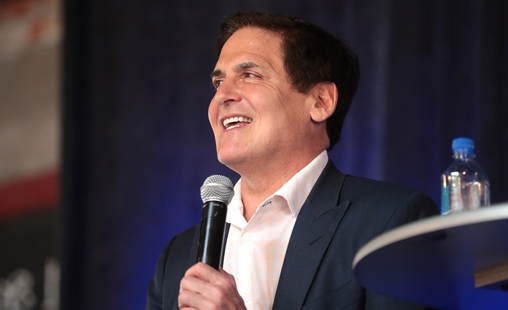
Yet the way we pay for healthcare has remained fundamentally unchanged for decades. As Mark Cuban has correctly observed, consumer frustration, employer complacency, and bureaucratic complexity make how we pay for healthcare ripe for disruption.
The only truly disruptive innovations in paying for healthcare have been limited to direct care and Mark Cuban's Cost Plus Drugs. The first, direct care, is a payment model adopted by independent and small physician groups that accept cash only, not insurance. The second, Cost Plus Drugs, is a pharmacy that deals directly with drug manufacturers and sells drugs directly to consumers at a flat 15 percent profit. This minimally undercuts pharmacy drug prices, but significantly undercuts more than 80% of insurers' cost-sharing copays above $15. Cost Plus Drugs has offered such reduced rates compared to insurance copays that it has become the talk of the nation.
The success of Cost Plus Drugs clearly demonstrates that a direct drug-pricing model can save consumers money and thereby disrupt the status quo of how we pay for healthcare. While the usual way we pay for prescription drugs involves a long, convoluted, and opaque process of rebates and backroom negotiations, Cost Plus Drugs took the revolutionary tactic of buying straight from the manufacturer and selling at a transparent markup. That simple innovation was all it took to disrupt how we pay for prescription drugs.
But if Cuban wants to truly "f–k up healthcare," as he says he does, he should also challenge our fundamental assumptions underlying the provision of healthcare—assumptions that have led to our complicated and outdated payment systems.
As Cuban points out, corporate interests and complacent employers are complicit in supporting the opaque health insurance system that invents rates and hides behind non-disclosure agreements. But also at fault for perpetuating our system are all of us consumers of healthcare—employers and individuals alike—who defend the very model that creates the opacity and complexity, namely, comprehensive health insurance.
Health insurance is an amazing product when limited to expensive, catastrophic, and unexpected events. But using insurance to pay for routine prescription drugs, as well as other forms of routine and predictable healthcare, is a terrible idea. Our over-application of insurance to routine healthcare services increases their price and the complexity of payment schemes. Why? Because insurance removes the pricing signal and the competition to offer something more affordable. Why offer a more affordable drug or service if insurance is going to cover the expensive option anyway?
Furthermore, because health insurers are legally mandated to cover an ever-expanding list of drugs, their only tool to contain costs is to erect bureaucratic barriers: high deductibles, complex prior authorizations, ever-changing formularies, and confusing co-pays. And while pharma, insurers, and PBMs have exploited the complexity for financial gain, they ultimately operate within a regulatory ecosystem that is shaped by the comprehensive insurance mandate.
By contrast, over-the-counter drug prices are transparent because patients pay for them directly, with cash. Prices for LASIK vision correction are transparent and relatively affordable because insurance doesn't cover them. The same can be said for many plastic surgery procedures, hair transplants, longevity clinics, and a slew of cosmetic procedures.
Cuban's Cost Plus Drugs has shaken up the prescription drug marketplace and even prescription drug insurance by contracting with employers to provide an alternative to more expensive traditional drug coverage. But if he really wants to "f**k up healthcare," he needs to go further. The limitations of Cuban's approach are best illustrated by a non-medical comparison: the disruption of the for-hire transportation industry.
A decade ago, the taxi industry held a legal monopoly over city transit, but it also held a cognitive monopoly over what for-hire transportation could entail.
Imagine if Uber had only built an app that added GPS and allowed riders to request taxis within the existing legal medallion framework. Such an approach would have only made the status quo slightly less bad, making it easier to ride within the existing artificially small pool of taxis. Instead, Uber was truly disruptive because it challenged our assumptions about what for-hire transportation could look like—namely, that anyone with a smartphone and a clean driving record could provide a ride. Uber bypassed the medallion system entirely, performing an end run on the entrenched taxi medallion system, which further forced the old system to adapt and improve.
Initially, the idea of Uber was dismissed as outlandish and unsafe. Today, we take it for granted that we can "take an Uber" all over the world. "To Uber" has become a verb. Even the Japanese Uberする. And the idea of disrupting a market through the implementation of a digital gig economy also has a new word in many languages: Uberize, Uberizar, уберизировать.
Cuban's Cost Plus model improves transparency and simplifies the market, performing an Uber-like end run around prescription drug pricing. But the genuine disruptive power of Cost Plus Drugs doesn't stem from the pressure it puts on institutions to be better actors but rather from a proof of concept: it shows that we do not need health insurance to cover most routine prescription drugs or, by extension, predictable healthcare expenses at all.
True disruption must go beyond challenging the gatekeeper's vested interests; it must also challenge the consumer's defense of and attachment to comprehensive insurance. Why do we base all attempts at reform and new payment arrangements on this one outdated ideal?
But while Cuban challenges the complexity of comprehensive health insurance and the opaque systems of insurers and PBMs (NDAs, hidden negotiations, and the sequestration of utilization data), and even the complicity of employers who fail to seek out the best health care deals for their employees, he doesn't challenge the status quo of comprehensive health insurance. He doesn't move beyond the cognitive monopoly of the last 80 years that treats comprehensive coverage as the ideal way to pay for healthcare.
As long as third-party comprehensive insurance remains the standard by which we judge other payment models, true price transparency will remain limited and short-lived, and the Uberization of how we pay for prescription drugs, let alone the rest of healthcare, will remain ahead of us in the future, a dream of disruption forever beyond our grasp.
This article also appears on Dr. Colleen Smith's Substack.